WE HAVE MOVED TO 315 OUTRAM ROAD, TAN BOON LIAT #14-09 S169074. 5 minutes walk from Havelock MRT Exit 1!

NEWS & UPDATES
Published Articles
- 15 Mar 2026: Increasing Number of Altered and Recoloured Cards in Recent Grading Submissions
- 1 Mar 2026: Pokémon Pre-Order Scam 2026: What the Fulfillment TCG / PawsTCG Situation Reveals About Pre-Order Risk
- 27 Feb 2026: PSA vs TAG vs BGS Grading Comparison (2026): Which Card Grading Company Should You Choose?
- 11 Feb 2026: PSA Updates Bulk Tier Structure and Pricing (February 2026)
15 Mar 2026
Recently we have observed an increasing number of cards returning from grading submissions labelled “Altered” or “Evidence of Recolouring.”
This has occurred across submissions sent to grading companies such as BGS and TAG.
At the same time, card “restoration” services have become more visible in Singapore, with some offering cosmetic improvements to cards before resale or grading.
Collectors should understand that any recolouring, re-inking, or modification to a card can be detected during professional grading. Once identified, the card will typically be labelled Altered, which usually prevents it from receiving a numerical grade.
Why This Matters
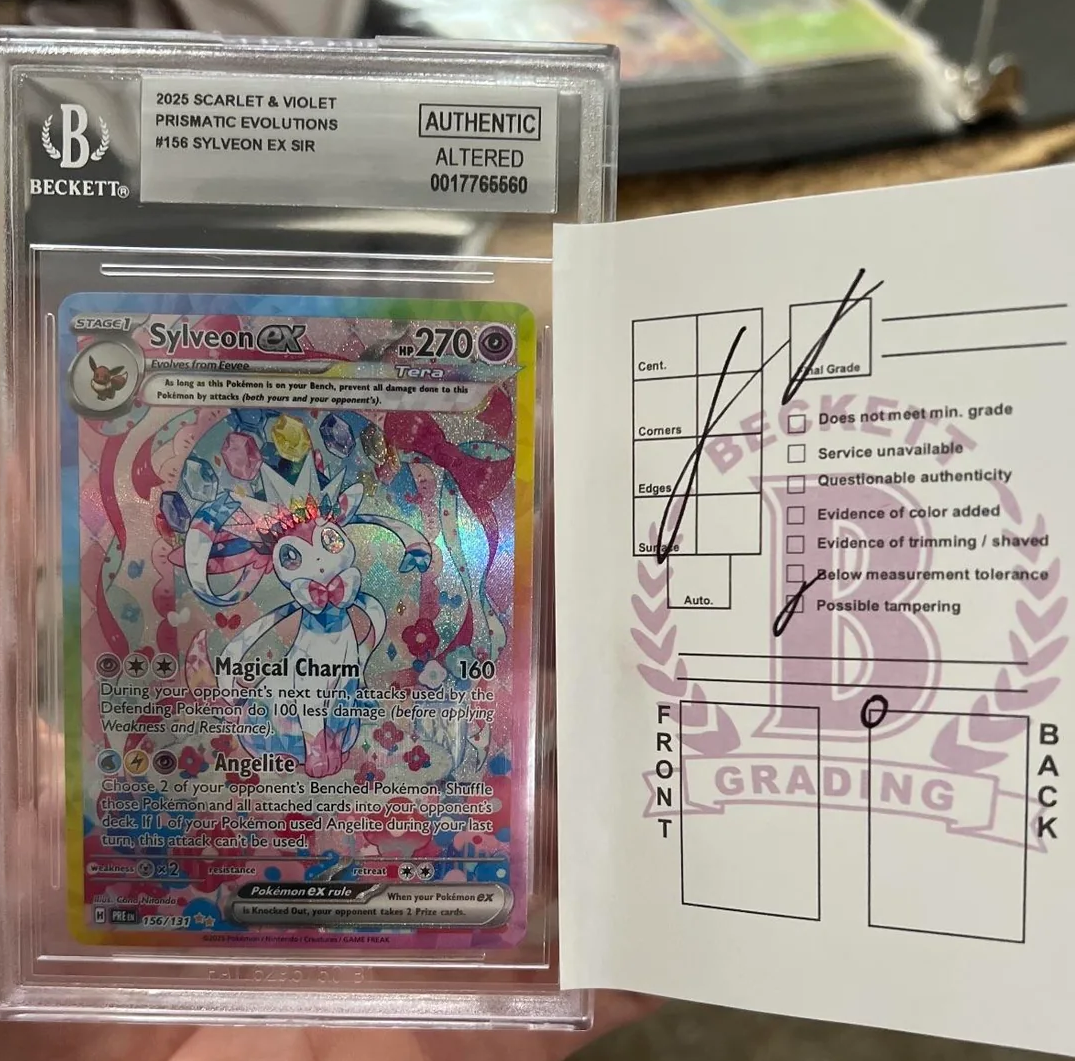
When a grading company determines that a card has been altered:
- the card typically cannot receive a numerical grade
- the slab will be labelled Altered
- resale value can drop significantly compared to an unaltered copy
A card that appears visually clean may therefore become far less valuable after grading if restoration work is detected.
Risks for Buyers
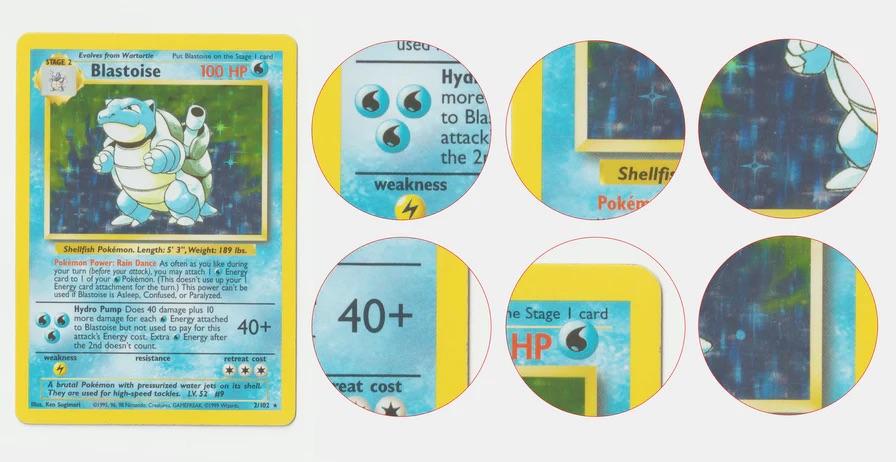
Exercise caution when purchasing raw (ungraded) cards, especially in environments where cards are bought quickly based on visual condition, such as at tradeshows.
Cosmetic restoration can hide defects such as:
- whitening along edges
- worn corners
- faded borders
- small surface imperfections
If these issues are covered through recolouring or touch-up work, a card may appear much higher condition than it actually is.
A buyer may therefore pay a price based on the apparent condition, only to later discover during grading that the card has been altered.
The Issue Is Not Limited to Buyers
It is also important to recognise that altered cards can circulate through the market unintentionally.
Collectors sometimes sell cards without knowing restoration work has been done. Vendors and shops purchasing collections may also unknowingly acquire altered cards if the modifications are difficult to detect.
Once the card is submitted for grading, however, the alteration may be identified.
For this reason, awareness across the hobby is important for both buyers and sellers.
Awareness for Collectors Considering Restoration Services
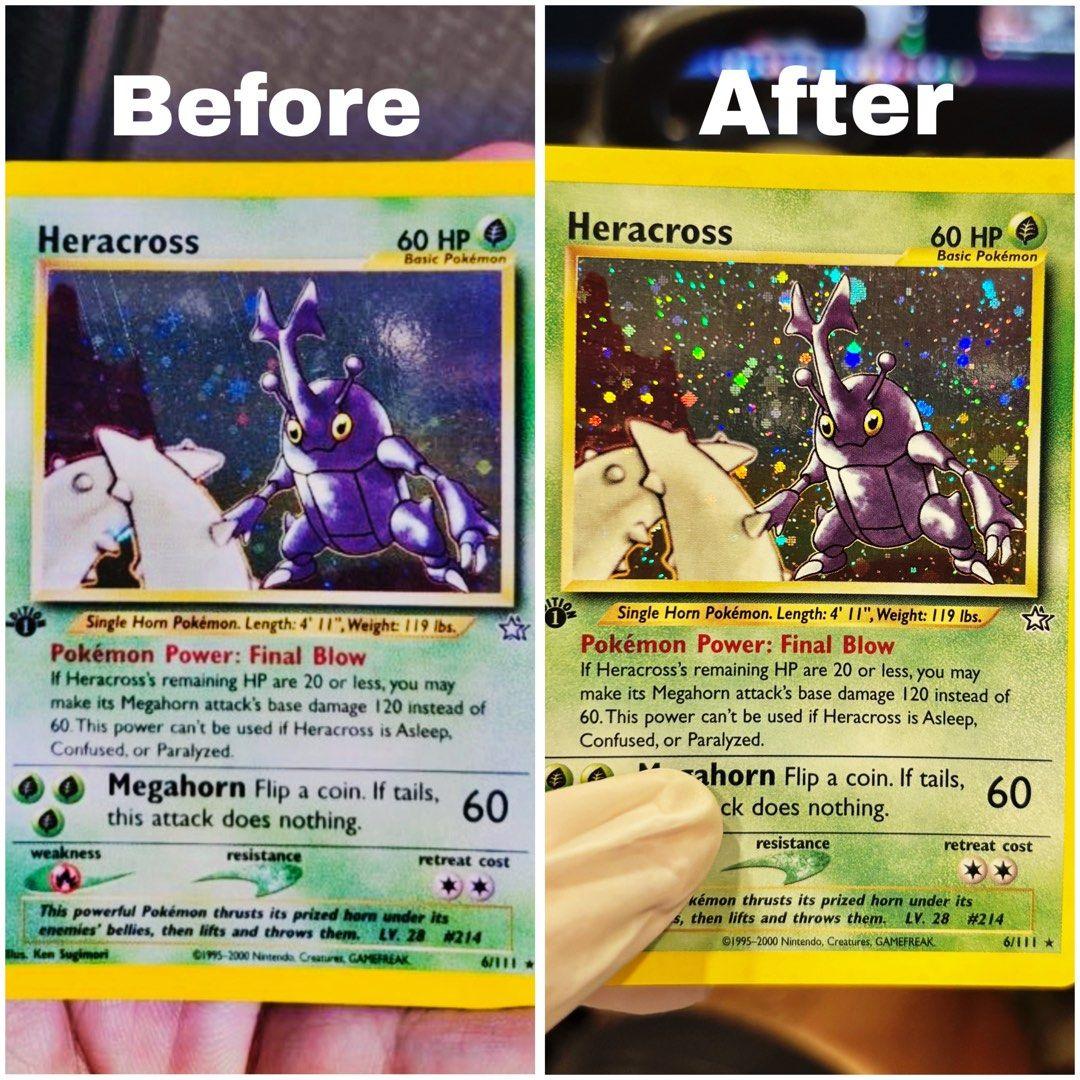
If you are considering sending cards for restoration, you should understand the implications before doing so.
Even small cosmetic changes such as:
- recolouring edge whitening
- touching up worn borders
- re-inking faded areas
may result in the card being classified as altered by grading companies including Professional Sports Authenticator, Beckett Grading Services, and Technical Authentication & Grading.
Once a card is identified as altered, that designation typically remains attached to the card permanently within grading records.
Consider carefully whether cosmetic improvements are worth the potential impact on grading eligibility and resale value.
Common Signs a Card May Have Been Recoloured or Altered
While alterations are sometimes subtle, there are several signs you can check when evaluating raw cards.
1. Darkened or Recoloured Edges
Edge whitening is one of the most common areas where recolouring occurs. Dark marker or ink may be used to hide wear along the borders.
Look for:
- edges that appear darker than the rest of the border
- uneven colour tones along the edge
- ink bleeding slightly into the card fibres
2. Uneven Colour on Borders
If a section of the card’s border appears slightly different in shade compared to the rest of the card, it may indicate touch-up work.
This is easiest to see under bright light, UV light or magnification.
3. Texture or Shine Differences
Recoloured areas may reflect light differently from the original printed surface.
Under angled light, altered areas may show:
- slightly different shine
- a glossy or matte patch
- inconsistent surface texture
4. Condition That Appears Too Clean
Sometimes the warning sign is inconsistency.
Examples include:
- edges that appear extremely sharp while the surface shows wear
- borders that look unusually perfect compared to the rest of the card
- vintage cards that appear almost flawless without grading
- This does not necessarily mean the card has been altered, but it may warrant closer inspection.
Final Thoughts
As grading technology improves, alterations are becoming easier for grading companies to detect.
Cards that appear visually clean may still be flagged as altered once examined under professional grading processes.
Understanding how restoration and recolouring affect grading outcomes can help you avoid costly surprises.
1 Mar 2026
The recent issue of pre-orders involving Fulfillment TCG and PawsTCG has prompted serious discussion within the community about how pre-orders are conducted and where buyers should place their trust.
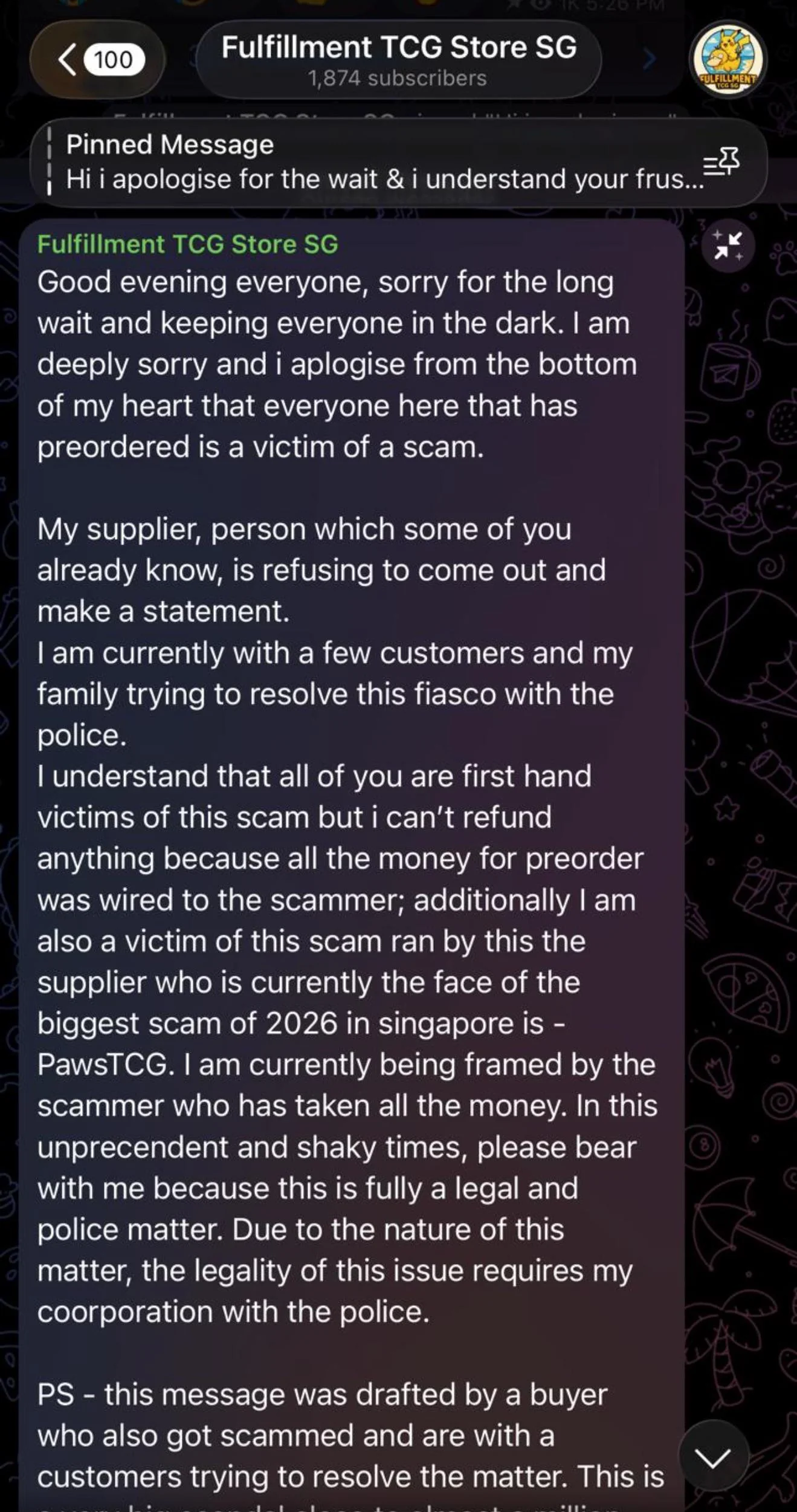
Based on information shared publicly by affected customers, buyers paid upfront for upcoming Pokémon Trading Card Game products through Fulfillment TCG. When the release date approached, customers were informed that there would be delays. Fulfillment TCG later stated that the funds had already been transferred to its upstream supplier, PawsTCG, and that the products would not be delivered.
Refunds were not immediately available. Victims began compiling payment records and outstanding orders. The total losses reported across the community run into the hundreds of thousands of dollars. Police reports have reportedly been filed and the matter is under investigation.
Responsibility between the parties remains disputed.
Marketplace Sellers vs Established Card Shops
Fulfillment TCG and PawsTCG were not long-standing retail stores. They operated primarily as marketplace sellers through platforms such as Carousell and private messaging channels (Telegram/Whatsapp).
Established trading card stores typically have several characteristics that reduce risk for customers:
- Multi-year operating history
- A physical storefront or registered business presence
- Distributor relationships with confirmed allocations
- A track record of fulfilling previous product releases
Marketplace sellers do not necessarily operate with the same structure. Many rely on upstream suppliers rather than direct distributor allocation. When that upstream supplier fails to deliver, the reseller may not have the capital to fulfill orders or issue refunds.
In practical terms, customers who paid upfront to save a few dollars per box may now be facing the loss of the entire payment.
How Pre-Orders Work in the TCG Industry
Trading card products are distributed through allocation. Retailers are assigned limited quantities by distributors.
Responsible stores normally follow a simple process:
- Allocation from distributor is confirmed.
- The store opens pre-orders based on that confirmed quantity.
- Orders are capped according to available allocation.
Problems arise when pre-orders are opened before allocation is secured. In those cases the seller is effectively betting that product will be obtained later through a supplier.
If that supply falls through, the seller may have no inventory to deliver.
Red Flags When Buying TCG Pre-Orders
Collectors should pay attention to several warning signs before placing pre-orders.
Seller history
- The seller has only appeared recently
- No record of previous releases fulfilled
- No physical shop or registered business
Allocation transparency
- Seller cannot confirm distributor allocation
- Unlimited pre-orders accepted
- No order limits/unlimited products
Payment structure
- Full payment or significant deposit required months before release
- Bank transfer only
- No invoice or written terms
Pricing
- Price significantly below established retail levels
- Large quantity offered despite a shortage in the market
Any single factor may not be decisive but when several appear together, the risk increases substantially.
Why Established Stores Matter
The trading card market has grown rapidly and moves large volumes of money during each release cycle.
Stores that have been operating for several years tend to follow stricter practices. Their reputation depends on fulfilling orders repeatedly across multiple releases.
This is why many collectors choose to buy from shops that have been around for at least three to five years. A longer operating history usually indicates stable supply relationships and a track record of delivery.
The Practical Lesson for Collectors
The Fulfillment TCG and PawsTCG situation highlights a common risk in the hobby.
When buyers send full payment to a reseller that has not secured allocation, the entire transaction depends on that reseller’s supplier. If that supplier fails, the customer may be left with no product and no refund.
Paying slightly less per box can look attractive at the time of purchase. If the supply chain collapses, the saving becomes irrelevant.
Conclusion
The investigation into the Fulfillment TCG and PawsTCG matter is ongoing. The outcome will determine where responsibility ultimately lies.
What the situation already shows is that the structure of the seller matters. Established card shops with confirmed allocations and several years of operating history remain the most reliable option for collectors placing pre-orders.
In the current trading card market, verifying the seller is just as important as choosing the product!
27 Feb 2026
If you collect or invest in trading card games (TCG), whether it’s Pokémon, One Piece, Yu-Gi-Oh!, Magic: The Gathering, sports cards, or other collectibles, choosing the right card grading company can directly impact your resale value, turnaround time, grading fees, and long-term return on investment.
In 2026, the three most discussed grading companies are PSA (Professional Sports Authenticator), TAG (Technical Authentication & Grading), and BGS (Beckett Grading Services). Each has strengths and weaknesses depending on whether you’re grading for profit, long-term investment, or personal collection.
This comprehensive PSA vs TAG vs BGS grading comparison breaks down:
- Grading cost and upcharges
- Turnaround times
- Resale value and liquidity
- Slab design and aesthetics
- Grading consistency and transparency
- Long-term investment potential
PSA Grading (Professional Sports Authenticator)
Best for: Fast resale, strong market liquidity, established reputation
Average cost: ~$43 (may increase with upcharges)
Turnaround time: ~6 months or longer
Grading method: Human grading
PSA remains the most recognized and widely accepted card grading company in the world. When buyers search for graded cards on eBay or auction platforms, PSA is often the default filter.
Resale Value & Liquidity
If your goal is to flip graded cards quickly, PSA still has the strongest liquidity. A PSA 10 is the most universally recognized benchmark across Pokémon, sports cards, and modern TCG.
Collectors, investors, and card shops understand PSA pricing instantly. This makes it easier to move inventory.
Grading Consistency
PSA uses human graders, which introduces subjectivity. Some collectors believe this occasionally works in their favor; borderline cards sometimes receive PSA 10 grades. However, inconsistency is a frequent criticism.
Two PSA 10 cards can look noticeably different in condition. PSA does not provide subgrades or a detailed grading report explaining how the grade was calculated.
Grading fees and Upcharges
One of the biggest complaints about PSA is upcharges. If your card grades high and exceeds certain market value tiers, PSA may increase your grading fee.
For investors focused on maximizing profit margins, this can significantly reduce net returns.
Slab design
PSA slabs are iconic but widely considered outdated. The red-and-white label is recognizable but lacks modern aesthetics compared to newer grading companies.
TAG Grading (Technical Authentication & Grading)
Best for: Transparency, no upcharges, modern slab design, DING Reports
Average cost: ~$33
Turnaround time: ~3 months
Grading method: AI grading and computer vision
TAG is one of the fastest-growing grading companies in 2026. Unlike PSA and BGS, TAG uses AI and machine-based grading technology instead of human graders.
AI grading and transparency
TAG measures centering down to the decimal and digitally maps surface imperfections. Each card comes with a full digital grading report explaining how the final score was calculated.
For collectors frustrated with subjective grading, this transparency is a major advantage. TAG also grades by a structured point system. Like in exams, you start out with 1000 points, and each defect will deduct some points. As long as you end up with 950 and above, it will still receive a TAG 10 (an "A" score).
Grading Fees
TAG does not charge upcharges. Whether your card grades a 7 or a 10, the fee remains the same. This predictable pricing model appeals strongly to card flippers and bulk submitters.
At approximately $33 per card, TAG is currently the cheapest among the three major grading companies.
Resale value
TAG 10 vs PSA 10 resale value depends heavily on the card. In many cases, TAG 10 sells near PSA 10 levels. However, liquidity is generally slower.
Online data from recent sold listings shows mixed results:
- Some high-demand cards (e.g., Umbreon VMAX from Evolving Skies) have seen TAG 10 sell higher than PSA 10.
- Other mainstream cards still see PSA 10 command stronger premiums.
Overall, PSA still wins on speed of sale, while TAG is closing the gap on price.
Slab Aesthetics
TAG slabs are widely considered the most visually appealing. The clear design and modern layout make them display-friendly for collectors.
TAG also includes leaderboard rankings and lower population counts, which can create scarcity premiums.
Risks
TAG AI grading is still evolving. While transparency is high, AI systems continue to refine their models. Some collectors question long-term stability compared to legacy brands.
BGS Grading (Beckett Grading Services)
Best for: Subgrades, high ceiling potential, Black Label premiums
Average cost: ~$55
Turnaround time: ~6 months
Grading method: Human grading with subgrades
BGS occupies a unique space in the grading market.
Subgrades and Grading Detail
Unlike PSA, BGS provides subgrades for centering, corners, edges, and surface. This gives buyers more detailed insight into the card’s condition.
Black Label
The biggest advantage of BGS is the Black Label 10. A BGS Black Label (all 10 subgrades) can command some of the highest resale premiums in the entire hobby.
If you believe your card is flawless, BGS offers the highest potential return.
BGS 9.5 vs PSA 10
Many collectors consider BGS 9.5 equivalent to PSA 10 in condition. However, market psychology favors the number “10” on the label. As a result, BGS 9.5 often sells for less than PSA 10 despite similar quality.
Industry Changes
BGS was acquired by Collector Group, PSA’s parent company. This consolidation has raised discussions about monopoly concerns and potential future changes in grading standards.
PSA vs TAG vs BGS: PRICE COMPARISON (Feb 2026)
Company | Base Cost | Upcharges | Turnaround | Liquidity |
PSA | ~$43 | Yes | ~6+ months | Highest |
TAG | ~$33 | No | ~3 months | Moderate |
BGS | ~$55 | No | ~6+ months | Moderate-High (Black Label) |
Which Card Grading Company Should You Choose?
If your goal is fast resale and strong market recognition, PSA remains the safest choice.
If you value AI grading, transparency, lower grading fees, and modern slab design, TAG is a strong alternative and continues to grow in popularity.
If you are chasing maximum upside and believe your card can achieve a Black Label, BGS offers the highest ceiling.
If you are grading a sentimental card or preserving a collection long term, the cheapest and most transparent option may make the most sense.
Final Thoughts on Card Grading in 2026
The grading market is evolving. AI grading, market consolidation, and changing collector preferences are reshaping the hobby.
There is no single best grading company for every situation.
The right choice depends on whether you prioritize:
- Resale liquidity
- Grading cost predictability
- Transparency and detailed reports
- Slab aesthetics
- Maximum return on investment
Understanding your goal before submitting is more important than the logo on the slab.
TL;DR:
- PSA = Best liquidity and fastest resale, but may include upcharges and longer turnaround times.
- TAG = Cheapest, AI-graded, no upcharges, modern slabs, slower resale but growing quickly.
- BGS = Most expensive, offers subgrades, highest upside with Black Label, longer wait times.
Choose based on your strategy: flip fast, preserve value, or chase the highest possible premium.
11 Feb 2026
Professional Sports Authenticator (PSA) has announced updates to its card grading service levels effective 10 February 2026.
As part of this update, PSA has consolidated TCG Bulk and Value Bulk into a single service level under Value Bulk, which will now apply to all eligible card categories. Pricing has also been revised across several tiers.
New Pricing
With PSA consolidating its bulk tiers, Newtro will be updating our PSA pricing:
TCG Bulk $34 -> Value Bulk $43
TCG Bulk 20+ $33 -> Value Bulk $42
TCG Bulk 50+ $32 -> Value Bulk $41
Please refer to the Grading page here for the other tier rates. This reflects the revised PSA structure while keeping our rates competitive within the local market.
Impact on Newtro’s Submission Batch #47 & #50
Our latest PSA submission batch #47 was prepared prior to the announced pricing update.
As Newtro processes submissions in consolidated batches rather than as individual retail entries, final classification under PSA’s system is determined at the point of formal intake on their end. We are currently clarifying with PSA whether this batch will be recognised under the previous tier.
We are in direct communication with PSA and will provide confirmation once this is finalised. Any additional charges to Batch #47 and #50 will only be payable upon return of the submission.
If the Updated Pricing Applies
If PSA confirms that the new tier applies to this batch, there will be an increase in grading costs at PSA’s level.
In view of the timing of this update, Newtro will absorb a significant portion of the adjustment for this batch. Affected customers will only be required to top up: SGD 4 per card
Newtro will absorb the remaining difference.
This arrangement applies strictly to this batch #47 and #50 due to the submission timing and processing circumstances.
We will provide confirmation once PSA reverts on the classification of batch #47 and #50.